
• Riding the Galloping Goose at Knott’s Berry Farm

    YouTube player

    A Calm Sunset Journey from the Engineer’s Seat

    Knott’s Berry Farm is often associated with roller coasters, fast movement, and high-energy attractions.

    But tucked inside the park is a very different kind of experience.

    The Galloping Goose Railroad — a short, historic train ride — offers something quieter. Slower. More reflective.

    During this visit, we rode just before sunset, when the sky turned soft shades of orange and yellow. Instead of sitting in one of the passenger cars behind, we were seated in the front car with the engineer.

    It changed the experience entirely.

    Rather than being pulled along for the ride, we became part of the rhythm of it.


    A Theme Park in Golden Hour Light

    Evening transforms Knott’s Berry Farm.

    As the sun lowers, the intense brightness of midday fades. The wooden buildings glow warmer. Shadows stretch across walkways. The sky begins to soften.

    The Galloping Goose moves through the park at a gentle pace, which makes sunset especially noticeable.

    From the front of the train, you can observe:

    • The way light reflects off steel track
    • The silhouettes of roller coasters against the sky
    • The gradual shift from bright afternoon to evening calm

    Unlike faster rides, this train allows you to actually watch the park change.

    There is no rush.

    Just steady forward movement.


    Inside the Engine: A Different Perspective

    Sitting in the front car with the engineer adds a layer of appreciation that most riders never experience.

    Before departure, there is preparation.

    Switches are checked. Controls are adjusted. The engine hums softly as it comes to life.

    The startup process is deliberate and mechanical — not flashy, not dramatic — just functional and steady.

    Watching the engineer work reveals something important about trains in general:

    Movement requires intention.

    Acceleration is gradual. Braking is controlled. Every action has a purpose.

    This quiet choreography between human and machine is easy to overlook when seated further back.

    From the front, it becomes the focus.


    The Sound of the Rails

    Unlike high-speed roller coasters, the Galloping Goose produces a softer rhythm.

    You hear:

    • The low hum of the engine
    • The subtle click of wheels over track joints
    • The ambient sounds of the park drifting past

    As the train moves, the world outside becomes framed like a moving picture.

    Families walking by.
    Food stands closing for the evening.
    Distant laughter from larger rides.

    But from the engineer’s seat, everything feels slightly removed — not isolated, just observed.

    It fits naturally within the Liamming philosophy of calm exploration 01 Home — being present without being overwhelmed.


    Passing the Park at Dusk

    One of the most memorable moments during the ride is passing near larger attractions.

    From the train, you might glimpse:

    • Roller coasters rising against a golden sky
    • Guests lining up in the fading light
    • Structures that feel taller in silhouette

    The contrast is striking.

    Fast rides tower overhead.
    The Galloping Goose continues steadily below.

    The difference in pace becomes symbolic.

    In a park built on thrills, this small train offers something grounding.

    It does not compete for attention.

    It simply moves forward.


    The Return to the Station

    As the ride comes full circle, the sky deepens in color.

    Orange shifts toward amber. Yellow softens into early evening blue.

    From the front car, you can watch the engineer ease the train back into the station. The deceleration is gradual. The engine winds down. Controls are reset.

    Shutdown is as intentional as startup.

    There is something satisfying about seeing a full mechanical cycle — beginning, movement, and return.

    It reminds you that transportation, even in a theme park, carries history.

    Railroads once connected towns, transported goods, and shaped cities. Even a small park railroad echoes that larger story.


    A Brief History of Park Railroads

    Theme park trains are inspired by real steam and early industrial railroads that transformed the 19th and early 20th centuries.

    Before modern highways and air travel, trains were among the most important technologies in the world.

    They:

    • Connected rural areas to cities
    • Enabled large-scale trade
    • Influenced the design of towns and amusement parks

    Knott’s Berry Farm itself has roots in California history, and its railroad attractions reflect that heritage.

    Even a short ride can serve as a gentle reminder of how transportation shaped society — a topic explored further in the learning sections about trains and innovation 03 Learn.


    Why Slower Attractions Matter

    Not every experience needs speed to be meaningful.

    In fact, slower attractions often allow for deeper observation.

    The Galloping Goose:

    • Encourages conversation
    • Offers perspective on the surrounding environment
    • Provides a transition moment between daytime excitement and nighttime atmosphere

    In busy environments, pauses are valuable.

    A calm ride at sunset becomes more than transportation — it becomes reflection.


    Sunset as a Transition

    Sunset is not dramatic in the way fireworks are.

    It does not demand attention.

    It unfolds gradually.

    From the engineer’s seat, you can watch the park’s lighting begin to glow as natural light fades. The sky shifts in layers. Movement in the park slows just slightly.

    There is a subtle change in energy.

    The Galloping Goose seems perfectly timed for that moment.

    Not a beginning.
    Not an ending.

    A transition.


    A Different Way to Experience Knott’s Berry Farm

    Many visitors focus on the largest rides first.

    But experiences like the Galloping Goose offer balance.

    They remind us that:

    • Movement can be steady rather than intense
    • Observation can be as engaging as adrenaline
    • Small attractions often hold unexpected depth

    From the front car, the ride becomes less about entertainment and more about process — how things start, how they move, and how they return.

    It becomes immersive in a quieter way.


    Final Reflection

    Riding the Galloping Goose at Knott’s Berry Farm during sunset is not about speed.

    It is about rhythm.

    The gentle hum of the engine.
    The glow of orange skies.
    The deliberate motions of the engineer.
    The steady roll of steel on track.

    In a theme park built around excitement, this short railroad offers something else:

    Space.

    Space to watch.
    Space to notice.
    Space to slow down.

    And sometimes, slowing down is the most memorable part of the journey.

  • A Calm Journey Across Oahu: From Waikiki’s Energy to a Quiet Island Sunset

    YouTube player

    Oahu is often introduced as an island of contrast.

    It is home to Honolulu’s skyline and Waikiki’s steady movement, yet only a short drive away are waterfalls, sea cliffs, quiet beaches, and landscapes that feel untouched by time.

    This walkthrough follows a full island rhythm — beginning in the heart of Waikiki, traveling across ocean waters and coastal roads, walking through lush greenery toward Waimea Falls, observing sea turtles resting on the shore, and ending with a long, peaceful sunset over the Pacific.

    Filmed without narration, the experience allows Oahu to speak through its atmosphere rather than explanation.


    Waikiki: Where the Island Meets the City

    Waikiki is vibrant from the moment you arrive.

    High-rise buildings reflect sunlight. Palm trees line busy sidewalks. The ocean glimmers just beyond rows of hotels and storefronts. The energy here is steady but not chaotic — a blend of tourism, local life, and beachfront culture.

    Walking through Waikiki offers layered sensory experiences:

    • The sound of distant waves mixing with city traffic
    • Warm air moving between buildings
    • Street performers and passing conversations
    • The scent of ocean salt and sunscreen

    Waikiki serves as an introduction to Oahu’s dual identity — modern yet deeply connected to the sea.

    Even in a lively area, moments of calm can be found. Standing at the shoreline, watching surfers wait patiently beyond the break, shifts attention from movement to rhythm.

    The ocean remains constant, even as the city hums nearby.


    The Waikiki Trolley: Seeing the City in Motion

    Riding the Waikiki Trolley offers a moving perspective of Honolulu and its surrounding neighborhoods.

    From the elevated seat, the city unfolds gradually. Streets curve toward Diamond Head. Parks open into green spaces. Residential areas transition into commercial districts.

    A trolley ride encourages observation rather than destination-focused travel.

    You notice details you might otherwise miss:

    • Murals painted along side streets
    • Historic buildings nestled between modern structures
    • Locals walking dogs or heading to work

    Transportation becomes part of the experience, not just a means to an endpoint.


    Learn more about Ocean and Sea Life with Liamming

    Boat Tour: The Island from the Water

    Leaving the shoreline by boat changes the scale of Oahu entirely.

    From the water, the skyline appears smaller. The coastline stretches wide. The ocean feels expansive and open.

    Boat tours reveal another dimension of the island — one defined by horizon rather than buildings.

    The movement of the boat creates a gentle rhythm:

    • The rise and fall over small swells
    • The sound of water brushing against the hull
    • Wind passing steadily across the deck

    Marine life sightings add an element of unpredictability. Sea birds circle overhead. Fish move beneath the surface. Occasionally, larger ocean wildlife may appear in the distance.

    Being on the water reinforces how central the ocean is to island life.

    Oahu is shaped by it — economically, culturally, and geographically.


    Driving Around Oahu: Coastlines and Open Roads

    One of the most rewarding ways to experience Oahu is by driving around the island.

    The scenery shifts quickly.

    Urban density gives way to open coastline. Cliffs rise dramatically above the ocean. Small towns appear between stretches of natural landscape.

    Coastal roads curve gently, revealing new views with each turn. Some sections feel rugged and windswept. Others feel calm and expansive.

    Driving allows you to witness the island’s diversity in a single day:

    • Bright turquoise bays
    • Rocky shorelines
    • Lush valleys
    • Quiet beaches away from central tourism

    Unlike destinations that require long distances between landscapes, Oahu compresses variety into accessible proximity.


    Waimea Falls: Walking Through Lush Greenery

    Waimea Valley offers a different side of Oahu — one defined by tropical plants, shaded paths, and layered vegetation.

    The walk toward Waimea Falls is gradual and immersive. The path is lined with botanical diversity. Leaves overlap in shades of green. Light filters through tall trees.

    The environment feels enclosed yet peaceful.

    As you approach the waterfall, the sound of falling water becomes clearer. The falls themselves are not massive, but they are steady and graceful.

    Water descends into a pool below, surrounded by rock and greenery.

    The experience is less about dramatic scale and more about texture — moss, stone, moving water, filtered light.

    It is a reminder that not all natural beauty needs to be overwhelming to be meaningful.


    Sea Turtles: Stillness on the Shore

    Few moments feel as grounding as watching sea turtles resting along a beach.

    Large, ancient, and unhurried, they lie quietly on the sand while waves roll nearby.

    Observing them encourages distance and respect. These animals move slowly, conserving energy, existing within rhythms that predate modern development.

    There is something powerful about witnessing wildlife in its natural habitat — not performing, not interacting, simply being.

    The contrast between gentle ocean movement and complete turtle stillness creates a balanced scene.

    It is a moment where patience replaces activity.


    Local Food and Markets: Everyday Island Life

    Beyond landscapes and wildlife, Oahu’s personality also lives in its markets and food culture.

    Local vendors offer fresh fruit, plate lunches, and traditional island flavors. Small markets display handmade goods and regional specialties.

    These spaces reflect community rather than spectacle.

    Walking through a market reveals:

    • Conversations between vendors and regular customers
    • The scent of grilled meats and tropical fruit
    • The rhythm of everyday life

    Travel experiences become richer when they include ordinary moments, not just iconic landmarks.


    Sunset Over the Pacific

    As the day slows, Oahu transforms again.

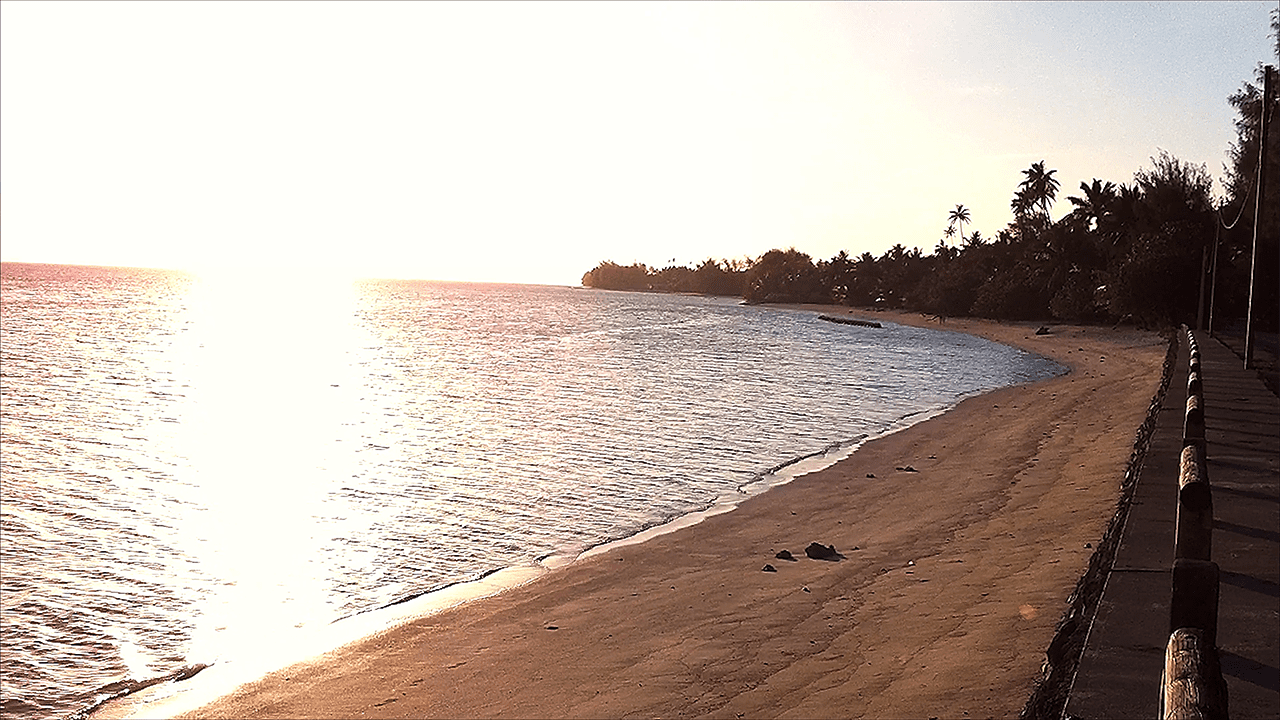
    Sunset along the beach feels expansive and unhurried. The sky shifts gradually from blue to warm tones of orange and pink. The ocean reflects changing light in soft gradients.

    People gather along the shoreline — some sitting quietly, others walking slowly along the sand.

    The horizon becomes the focal point.

    Sunset on an island feels different than sunset in a city. The absence of skyline obstruction creates a clear, uninterrupted view. The transition from day to evening feels complete.

    The ocean darkens gradually. The sky dims. Conversations soften.

    It is not a dramatic ending — it is a gentle close.


    Why a No-Narration Format Works for Oahu

    Oahu offers layered environments: city, ocean, forest, wildlife, sunset.

    Adding narration could compete with those elements.

    Without commentary, viewers can:

    • Focus on visual transitions
    • Absorb natural soundscapes
    • Interpret scenes personally
    • Use the video as ambient relaxation

    The island’s atmosphere carries the experience.


    A Study in Contrast

    What defines Oahu most clearly is contrast:

    City and nature.
    Energy and stillness.
    Movement and rest.

    You can begin the day surrounded by high-rise buildings and end it watching sea turtles beneath a fading sky.

    Few destinations offer that range within such short distances.


    Final Reflection

    Oahu is not just a place of beaches. It is a place of transitions.

    From Waikiki’s steady motion to the quiet rhythm of a waterfall.
    From boat rides across open water to turtles resting on warm sand.
    From bustling markets to silent sunsets.

    The island does not rush.

    Even in its busiest areas, the ocean remains constant. The mountains remain steady. The sky changes slowly overhead.

    Experiencing Oahu in a calm, observational way reveals something subtle but powerful:

    Balance.

    Movement balanced with stillness.
    Exploration balanced with rest.
    Energy balanced with quiet reflection.

    And as the sun lowers over the Pacific, the day closes not with urgency, but with ease.

  • A Quiet Walk Through Lake Tahoe: From Mountain Overlooks to the Shoreline

    YouTube player

    Lake Tahoe has a way of making you pause before you even realize you’ve stopped moving.

    The water stretches outward in deep blue clarity. Mountains frame the horizon in nearly every direction. The air feels cleaner, lighter, quieter. Even on busier days, there is something about the scale of the lake that absorbs noise and softens movement.

    This walkthrough begins from elevated viewpoints overlooking the lake and gradually transitions down to water level along the shoreline. Filmed without narration, the experience invites viewers to observe the landscape naturally — through light, texture, and distance.

    Instead of telling you what to notice, the video allows space for personal reflection.


    Elevated Views: Seeing the Full Scale

    Starting from higher ground changes how Lake Tahoe feels.

    From an overlook, the lake appears vast — almost ocean-like in size, yet calmer in personality. The shoreline curves gently around forested slopes. Snow may still cap distant peaks depending on the season. The water shifts color depending on depth and sunlight.

    From above, you can see gradients in the lake’s surface:

    • Deep navy tones further out
    • Brighter turquoise near shallower edges
    • Subtle ripples created by wind

    Elevated viewpoints provide perspective. They show how the lake sits within the Sierra Nevada mountains, cradled by ridgelines and tall pine forests.

    Standing at an overlook often encourages stillness. There is no urgency. The view does not change quickly. Clouds move slowly across the sky. Shadows shift gradually along the mountainsides.

    It is a landscape designed for long glances rather than quick looks.


    The Quiet Power of Water

    Lake Tahoe is one of the clearest large lakes in North America. That clarity becomes especially noticeable from above.

    You can see variations in depth, subtle rock formations beneath the surface, and changes in color caused by shifting light.

    Unlike the ocean, Lake Tahoe’s surface movement feels contained. Waves form, but they do not crash with the same intensity as coastal surf. The water rolls gently, reflecting the surrounding environment.

    From a distance, the lake appears almost motionless.

    Yet closer observation reveals constant micro-movements — wind brushing across the surface, small ripples reaching the shoreline, reflections stretching and reshaping.

    The power of Lake Tahoe lies not in dramatic motion but in quiet presence.


    Descending Toward the Shore

    Moving from an overlook down to the shoreline changes the experience entirely.

    From above, the lake feels expansive and panoramic. At water level, it becomes intimate.

    Rocks line the shore in smooth, rounded forms shaped by years of gentle contact with water. Pine trees lean slightly toward the lake. The scent of forest mixes with the coolness rising from the surface.

    At this level, sound becomes more noticeable:

    • Water lapping softly against stones
    • Wind moving through nearby trees
    • Occasional footsteps along the shoreline

    The environment feels grounded and tactile.

    You are no longer observing from a distance. You are within the scene.


    The Color of Lake Tahoe

    One of Lake Tahoe’s most striking features is its color.

    On clear days, the water can appear almost impossibly blue. The shade shifts throughout the day — deeper in midday sunlight, softer and more reflective during morning or evening.

    The contrast between the blue water and green pine forests creates a balanced, natural palette. It feels vivid without being overwhelming.

    At the shoreline, the water often transitions into lighter turquoise where the lake floor becomes visible. Smooth stones beneath the surface add texture and detail.

    This clarity encourages longer observation.

    Instead of glancing and moving on, you tend to linger — watching how light bends through shallow water or how reflections distort gently with each ripple.


    Mountain Framing and Stillness

    The mountains surrounding Lake Tahoe provide structure to the open water.

    They anchor the horizon. Their slopes rise steadily upward, covered in trees and seasonal color variations. In winter, snow adds brightness. In summer, deep greens dominate.

    From the shoreline, looking outward across the water toward distant ridgelines creates a layered composition:

    Foreground: Rocks and gentle waves
    Midground: Expansive lake surface
    Background: Mountain silhouettes

    This layered depth contributes to the lake’s calming effect.

    Your eyes move gradually across the scene rather than being pulled sharply in one direction.


    Why a No-Narration Walk Works Here

    Lake Tahoe does not require explanation to be appreciated.

    The absence of narration allows the viewer to absorb:

    • The natural sound of water
    • The subtle movement of wind
    • The rhythm of walking along the shore

    Without commentary, the experience becomes adaptable. It can serve as focused viewing, quiet background ambiance, or even a mental reset during a busy day.

    Silence (aside from natural sound) enhances the environment rather than competing with it.


    Seasonal Differences

    Lake Tahoe changes character with the seasons.

    In winter, snow-covered peaks create sharp contrasts against the water. The air feels crisp and invigorating. Fewer visitors may be present in certain areas, increasing the sense of solitude.

    In spring and summer, the forest becomes more vibrant. Wildflowers may appear along trails. The shoreline becomes more active with visitors enjoying the water.

    In autumn, the atmosphere shifts again — softer light, cooler temperatures, and quieter trails.

    Regardless of season, the lake maintains its clarity and scale.


    Slowing Down by the Water

    Walking along the shoreline encourages a slower pace.

    There is no defined finish line. No attraction to queue for. No structured timeline.

    You can pause to watch the water meet the rocks. Sit and observe reflections. Trace the outline of mountains across the horizon.

    This type of experience contrasts sharply with environments designed for stimulation.

    Lake Tahoe invites stillness.

    It does not demand attention — it simply holds it.


    Practical Reflections for Visitors

    For those planning a visit to Lake Tahoe on the California side:

    • Early mornings provide softer light and calmer water conditions.
    • Parking near scenic overlooks often fills quickly during peak seasons.
    • Comfortable walking shoes are recommended for shoreline exploration.
    • Even short visits benefit from spending unstructured time near the water.

    Layered clothing can be helpful, as temperatures near the lake can shift quickly depending on wind and elevation.


    Perspective and Space

    Large bodies of water often create emotional space.

    Standing beside Lake Tahoe, it becomes easier to separate from immediate concerns. The size of the landscape gently shifts perspective.

    The mountains have stood for centuries. The lake has maintained its clarity through careful conservation efforts and natural balance.

    Observing something stable and expansive can feel grounding.


    Final Reflection

    Lake Tahoe does not overwhelm with motion or spectacle. Its strength lies in openness and clarity.

    From elevated overlooks, the lake feels expansive and grand. From the shoreline, it feels intimate and steady.

    The journey from high vantage points down to water level mirrors a shift from observation to immersion.

    Sometimes, the most meaningful travel experiences are not the loudest or busiest ones. They are the moments spent watching light change across water. Listening to wind through trees. Walking slowly along a quiet shoreline.

    Lake Tahoe offers that kind of experience — one built on stillness, scale, and the simple act of looking outward.

    And sometimes, looking outward is exactly what allows us to slow down within.

  • Experiencing Niagara Falls in Stillness: A Calm Walk Along the Canadian Side

    YouTube player

    Niagara Falls is often described in superlatives. Powerful. Thunderous. Iconic. Millions of gallons of water cascade over the edge every minute, creating one of the most recognizable natural landmarks in the world.

    Yet when you stand beside it long enough, something unexpected happens.

    The noise becomes steady. The mist becomes rhythmic. The motion becomes almost hypnotic.

    This walkthrough captures Niagara Falls from the Canadian side in a calm, uninterrupted way — not as a spectacle, but as an environment. Without narration or commentary, the focus shifts from tourism to observation.

    Instead of rushing to photograph it and move on, the experience becomes about simply standing still and watching water move.


    First Impressions: Scale and Sound

    Approaching Niagara Falls, the first sensation is sound.

    It builds gradually. A distant roar becomes a constant presence. Even before the water is fully visible, the vibration of its movement fills the air.

    Then the falls come into view.

    From the Canadian side, you gain a sweeping perspective of both the American Falls and the larger Horseshoe Falls. The curvature of the Horseshoe Falls is particularly striking — a wide arc of white water bending inward before dropping into mist below.

    Scale defines the moment.

    The water does not trickle. It does not hesitate. It moves with certainty.

    Yet despite its force, there is a pattern to it — a continuous flow that never stops.


    The Hypnotic Nature of Repetition

    At first glance, Niagara Falls seems chaotic. Water crashes. Mist rises unpredictably. Wind shifts the spray in different directions.

    But when you watch long enough, you notice repetition.

    The water pours over the edge in steady sheets. The mist swells and settles. Waves roll outward below the falls in predictable rhythms.

    The human mind finds calm in repetition.

    That is why watching waterfalls can feel meditative. The motion never pauses, yet it is consistent. There is no sudden surprise. Only continuation.

    Filming the falls without interruption preserves that rhythm. Instead of cutting quickly between angles, the camera remains steady, allowing viewers to settle into the movement.


    Light and Mist

    One of the defining characteristics of Niagara Falls is mist.

    As water crashes into the river below, it rises again as a fine spray. On sunny days, this mist often refracts light into faint rainbows. On overcast days, it creates a softer, more muted atmosphere.

    The mist adds dimension.

    It blurs the line between solid and air. It partially obscures the base of the falls, making the drop feel even more dramatic.

    From certain angles, the mist feels almost like breath — the landscape exhaling continuously.

    Standing near the railing along the Canadian promenade, you can feel the cool moisture in the air. It is refreshing, especially during warmer months.

    The environment engages more than just sight and sound. It engages temperature and texture.


    The Power of the Horseshoe Falls

    The Horseshoe Falls, which sit mostly on the Canadian side, carry the largest volume of water. Their curved shape creates a visual embrace of motion — water moving inward before falling downward.

    Looking across the arc, you see how wide the formation truly is. Boats appear small in comparison. People along the edge seem distant.

    The drop itself measures roughly 167 feet (51 meters), but the height alone does not communicate its presence. It is the width and force combined that leave an impression.

    Even after several minutes of observation, the falls do not feel repetitive in a dull way. They feel constant in a grounding way.

    There is something reassuring about witnessing natural power that does not fluctuate unpredictably. It simply continues.


    Viewing From the Canadian Side

    The Canadian side of Niagara Falls offers a panoramic vantage point.

    Rather than standing directly beside the water as it drops, visitors gain a broader view of the full formation. This perspective allows you to see both major falls together and appreciate the geographic layout.

    Walking along the paved pathways, you pass multiple viewing areas. Each angle offers slight variations in composition:

    • Direct frontal views of the American Falls
    • Wide shots of the Horseshoe curve
    • Side perspectives emphasizing the drop

    The promenade itself is designed for walking at a comfortable pace. Railings provide safety while remaining unobtrusive.

    This setup supports a slow walkthrough.


    A Study in Natural Force

    Niagara Falls exists because of geological processes stretching back thousands of years. The falls continue to erode rock gradually, shifting position over time.

    What appears permanent is actually in motion.

    This duality — permanence and change — makes the falls fascinating beyond their visual impact.

    The water flowing today is not the same water flowing yesterday. Yet the overall form remains recognizable.

    It is a reminder that stability does not mean stagnation.


    Why No Narration Matters Here

    A landmark as famous as Niagara Falls does not require explanation to be understood visually.

    By removing narration, the experience becomes more immersive.

    The sound of rushing water becomes the soundtrack. The wind becomes part of the environment. Viewers are not guided toward specific facts but instead invited to observe.

    This format allows space for interpretation.

    Some may focus on geological history. Others may focus on emotional impact. Others may simply use the video as calming background ambiance.

    Silence (aside from natural sound) creates room.


    The Emotional Impact of Scale

    Large natural landmarks often create a specific emotional response — a blend of awe and humility.

    Standing beside Niagara Falls emphasizes human scale in contrast to natural force.

    Railings, pathways, and buildings nearby feel small compared to the vast sheet of moving water.

    This contrast can feel grounding.

    In everyday life, many stressors feel large and overwhelming. Witnessing something truly large — in a physical, undeniable sense — can recalibrate perception.

    The falls do not react to observers. They do not pause. They do not accelerate.

    They simply continue.


    Visiting Considerations

    For those planning a visit:

    • Early morning and late afternoon provide softer lighting and fewer crowds.
    • Overcast days create a dramatic, moody atmosphere.
    • Clear sunny days often reveal rainbows in the mist.
    • Waterproof layers are helpful if standing close to the railing for extended periods.

    Even short visits benefit from slowing down. Rather than capturing a quick photo and moving on, staying for several minutes changes the experience entirely.


    Final Reflection

    Niagara Falls is often presented as an attraction — something to see, photograph, and check off a list.

    But when approached slowly, it becomes something else.

    It becomes a study in continuity.
    A reminder of natural force.
    A demonstration of repetition without monotony.

    Water falls. Mist rises. Wind shifts.
    And then it happens again.

    Watching Niagara Falls without commentary allows space for quiet observation. It transforms spectacle into presence.

    Sometimes the most powerful experiences are not the loudest moments, but the ones where we choose to stand still and watch something greater than ourselves move — endlessly, patiently, and without interruption.