
Sea Turtles: Ancient Travelers of the Ocean
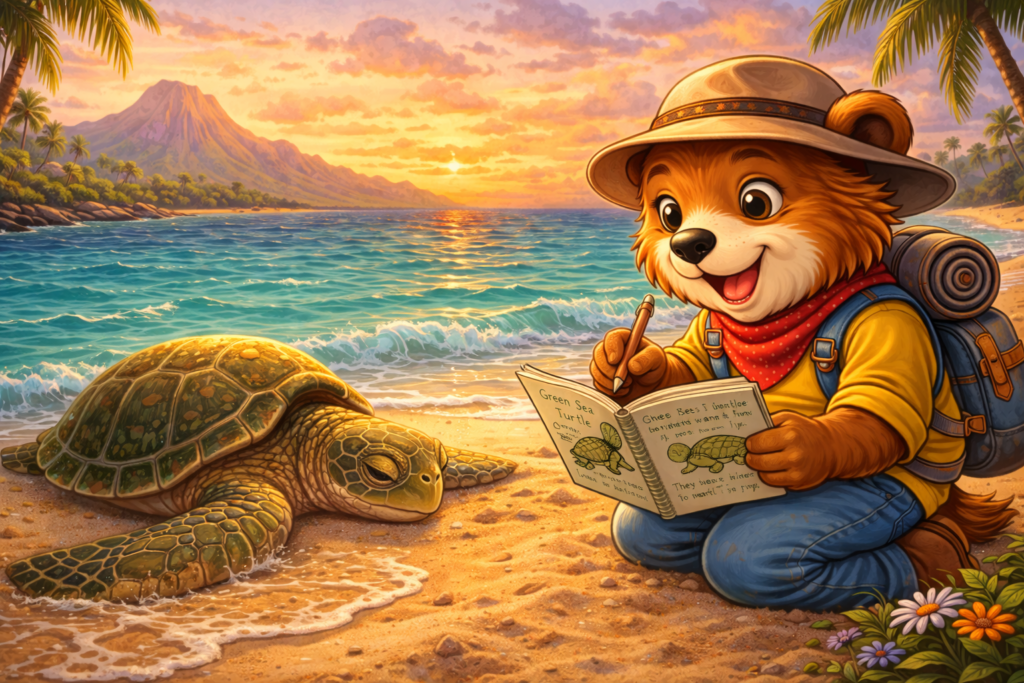
Liamming has always been drawn to sea turtles, especially after learning about them during an Oahu journey.
Sea turtles are among the oldest living creatures on Earth. They have existed for more than 100 million years, surviving the extinction of dinosaurs and adapting to dramatic changes in climate and oceans. Calm, steady, and resilient, they move through the water with quiet strength.
These animals are more than just long-lived species — they are important parts of marine ecosystems. Sea turtles help maintain healthy seagrass beds and coral reefs, contributing to the balance of ocean environments.
In Hawaii, sea turtles hold special cultural significance. Known locally as honu, they are respected and protected, and are often seen resting along the shoreline or gliding through coastal waters. Observing them in their natural habitat offers a glimpse into both the biological and cultural connections that shape the region.
Understanding sea turtles helps us appreciate marine life, conservation efforts, and the delicate balance of ocean ecosystems. Through their long migrations and steady presence, they remind us how interconnected and enduring life in the ocean can be.
What Is a Sea Turtle?
Sea turtles are reptiles that live in the ocean.
Like other reptiles, they:
- Breathe air using lungs
- Lay eggs on land
- Have scaly skin
- Are cold-blooded (their body temperature depends on the environment)
Unlike land turtles, sea turtles have:
- Flippers instead of legs
- Streamlined shells for swimming
- The ability to travel long distances across oceans
There are seven species of sea turtles worldwide.
Sea Turtles Found in Hawaii
Two main species are commonly found in Hawaiian waters.
1. Green Sea Turtle (Honu)
Scientific name: Chelonia mydas
The green sea turtle is the most common turtle in Hawaii.
Why are they called “green” turtles?
The name comes from the color of their body fat, which has a greenish tint due to their plant-based diet.
Green sea turtles:
- Can grow up to 4 feet (1.2 meters) long
- Can weigh over 300 pounds (136 kg)
- Mostly eat algae and sea grass
- Often rest on Hawaiian beaches
In Hawaii, honu are protected by law. It is illegal to touch or disturb them.
They are considered a symbol of good luck, endurance, and wisdom.
2. Hawksbill Sea Turtle (Honuʻea)
Scientific name: Eretmochelys imbricata
The hawksbill turtle is much rarer in Hawaii.
It has:
- A narrow, pointed beak (like a hawk)
- A beautifully patterned shell
Hawksbill turtles often feed on sponges found in coral reefs.
Because their shells were historically used to make decorative items, hawksbill turtles became endangered.
Today, they are protected worldwide.
The Life Cycle of a Sea Turtle
Sea turtles begin life on land.
- A female turtle crawls onto a sandy beach at night.
- She digs a nest in the sand.
- She lays around 80–120 eggs.
- She covers the nest and returns to the ocean.
After about two months, hatchlings emerge.
They instinctively move toward the brightest horizon — usually the moonlight reflecting on the ocean.
This journey is dangerous. Birds, crabs, and fish may prey on them.
Only a small percentage survive to adulthood.
Adult sea turtles can live for 50 years or more.
How Sea Turtles Navigate
Sea turtles are remarkable navigators.
Scientists believe they use:
- Earth’s magnetic field
- Ocean currents
- Sunlight positioning
Some turtles travel thousands of miles between feeding areas and nesting beaches.
A turtle born in Hawaii may travel across the Pacific Ocean and later return to the same beach to lay eggs.
Why Sea Turtles Matter to Ocean Ecosystems
Sea turtles play an important role in maintaining healthy oceans.
Green sea turtles help control sea grass growth.
By grazing on sea grass, they:
- Prevent overgrowth
- Promote healthy plant regrowth
- Support habitats for fish and marine life
Hawksbill turtles help coral reefs by eating sponges that compete with coral.
Healthy turtle populations contribute to balanced marine ecosystems.
Threats to Sea Turtles
Despite their long history, sea turtles face many modern challenges.
Plastic Pollution
Turtles may mistake plastic bags for jellyfish.
Eating plastic can cause injury or death.
Fishing Nets
Accidental capture in fishing gear (called bycatch) is a major threat.
Coastal Development
Bright lights and construction near beaches can confuse hatchlings.
Climate Change
Rising temperatures affect sand temperature.
The temperature of sand determines whether hatchlings are male or female.
Warmer sand tends to produce more female turtles.
This imbalance could affect future populations.
Sea Turtles in Hawaiian Culture
In Native Hawaiian traditions, honu are seen as guardians and symbols of long life.
They represent:
- Protection
- Guidance
- Connection between land and sea
Seeing a honu resting calmly on the shore is considered special.
Visitors are encouraged to observe respectfully from a safe distance.
How People Can Help
Protecting sea turtles involves simple actions:
- Reduce plastic use
- Dispose of trash properly
- Respect wildlife viewing guidelines
- Support marine conservation efforts
In Hawaii, staying at least 10 feet (3 meters) away from sea turtles helps reduce stress and disturbance.
Small actions can protect ancient creatures.
Fun Facts about Turtles
Turtles are among the oldest reptile groups on Earth, with ancestors that lived more than 200 million years ago — meaning they shared the planet with dinosaurs. One of their most recognizable features, the shell, is not something they can leave behind; it is actually part of their skeleton. A turtle’s ribs and spine are fused to the shell, forming a protective structure made of bone covered by keratin, the same material found in human fingernails. This built-in armor has helped turtles survive for millions of years.
Sea turtles are remarkable navigators. After hatching on a beach and making their way to the ocean, they can travel thousands of miles across open water. Years later, many females return to lay eggs on the very same beach where they were born. Scientists believe they use Earth’s magnetic field as a kind of natural GPS, detecting subtle magnetic cues to guide their journeys. Despite their often slow movement on land, sea turtles are strong and graceful swimmers, using powerful flippers to glide efficiently through ocean currents.
Different types of turtles have adapted to very different environments. Some live almost entirely in water, while others are terrestrial tortoises that thrive in deserts or grasslands. Many turtle species are known for their long lifespans, with some tortoises living over 100 years. However, turtles face significant modern challenges, including habitat loss, pollution, and plastic waste in oceans. Observing a turtle resting calmly on a beach or moving steadily through water offers more than a quiet moment — it connects us to a lineage of life that has endured through vast stretches of Earth’s history.
Final Reflection
Sea turtles have crossed oceans for millions of years.
They move steadily through currents, return faithfully to beaches, and quietly shape marine ecosystems.
In Hawaii, the honu resting on warm sand reminds observers to slow down.
Understanding sea turtles connects biology, geography, conservation, and culture.
They are living links to Earth’s distant past — and their future depends on thoughtful care today.
Suggested Reading & Books
The following books recommendations are accessible to parents, educators, and thoughtful readers.
- Lovich, Jeffrey – Turtles of the World: A Guide to Every Family
- Turtles (National Geographic Kids Readers, Level 1)
- Montgomery, Sy – The Book of Turtles: A Fact-Filled Picture Book About Beloved Reptile Species for Children (Ages 4-8)
- The Nature Kid’s Guide to Turtles: A Level 2 Reader for Curious Young Kids Who Love Turtles!
- Animal Reads – All Things Turtles For Kids: Filled With Plenty of Facts, Photos, and Fun to Learn all About Turtles
- Igloo Books – Nature Stories: Little Turtle-Discover an Amazing Story from the Natural World: Padded Board Book
Sources & Further Reading
The following trusted organizations provide accurate, educational information about sea turtles and conservation efforts:
- NOAA Fisheries – Sea Turtles
https://www.fisheries.noaa.gov/sea-turtles - NOAA Fisheries – Hawaiian Green Sea Turtle (Honu)
https://www.fisheries.noaa.gov/species/green-turtle - National Geographic – Sea Turtles
https://www.nationalgeographic.com/animals/reptiles/facts/sea-turtles - U.S. Fish & Wildlife Service – Hawksbill Sea Turtle
https://www.fws.gov/species/hawksbill-sea-turtle-erethmochelys-imbricata - Hawaii Department of Land and Natural Resources – Sea Turtle Guidelines
https://dlnr.hawaii.gov/wildlife/sea-turtles/
These resources are provided for educational purposes and to encourage continued learning about marine life and conservation.